

Thankful for complexity
A little meandering ramble

Did you know that in Japanese there is a gender-neural term for cowboy camping? It’s nojuku, 野宿, communicating the essence of sleeping out in the open air, beneath the stars. Not that I quibble about the term cowboy camping necessarily. Regardless of your gender, you kind of feel like a cowboy when you’re lying there beneath all those galaxies, with the smell of campfire spiritually, if not literally, wafting through your nostrils, the songs of whatever nearby animals lulling you to sleep. In Mission Creek on the southern Pacific Crest Trail it was frogs. Hundreds of frogs singing into the star-speckled night. You wouldn’t think there would be that many frogs in the desert, but if there’s one thing I learned from the Southern California section of the PCT, it’s that people don’t really understand the concept of desert. It isn’t a monolith. It’s not all cracked ground and no water. It’s innumerable biomes and communities tucked into countless twists and turns that are always bound to surprise you in one way or another. We tend to collapse things—places, people, animals, regions—into a concept that is easy to categorize and hold. This is like is. And that is like that. That’s that.
But life isn’t one thing, and neither is a person, or the desert. If there’s one word I use far too often in my AP classes it’s complex. Any of my students would tell you that, and roll their eyes in the telling. “Ok, but how is that complex?” I’ll ask, about a moment of characterization, or an interpretation, or a link to a broader concept. We want to just say, that’s a metaphor. Check. But what literature demands of us is not tallies or ticked boxes, but holding conflicting truths in our hands at the same time. Seen one way, it’s like this. But shift your perspective, and you can see it as all these others. It’s just that language collapses the real world into handy, hold-able devices. Our brains want to be plastic bags carried out from towns. Our minds seek easy patterns and stick to them.
In How to Change Your Mind, Michael Pollan asserts that the real value of psychedelics like psilocybin and LSD is not that they make you trip, or send you somewhere else for a few hours, but that they pull you out of the ruts of your mind and re-wire old and tired connections. Humans tend to follow the same paths over and over. Driving recently, it has struck me how many roads in my hometown I’ve never gone down. How many streets and neighborhoods I have lived adjacent to, but never seen, or known, for decades of my life. It’s the same thing when you walk or run on a street you’ve only driven previously, as I have had occasion to do recently. Your perspective shifts. You find yourself somewhere new, even if it’s not new at all. I never noticed that, you might say. Or, Has that shop always been there? I’m guilty of collapsing the world around me into more easily holdable truths, instead of standing at the intersection of conflicting paths and bathing in the tension.
I feel down to my bones that I am at a crossroads. The ruts have worn in deep and I am ready to uproot. Maybe it’s a November thing. If it’s any indication, for the past two years my November newsletters seem to have focused on a feeling of overwhelm: last year it was being desperate to lie around for five days after my surgery, and the year before, I wrote of feeling like an automaton, stuck in a robotic rut of wake, work, sleep, repeat.
In all fairness, as an educator, November just do be like that. It is the time of year when everything is a constant cascade towards midterms and Christmas events and madly trying to get everything done before winter break, and so some burnout seems inevitable. But this year I just feel uniquely tired. I have senioritis. I feel my motivation slipping away with every passing moment.
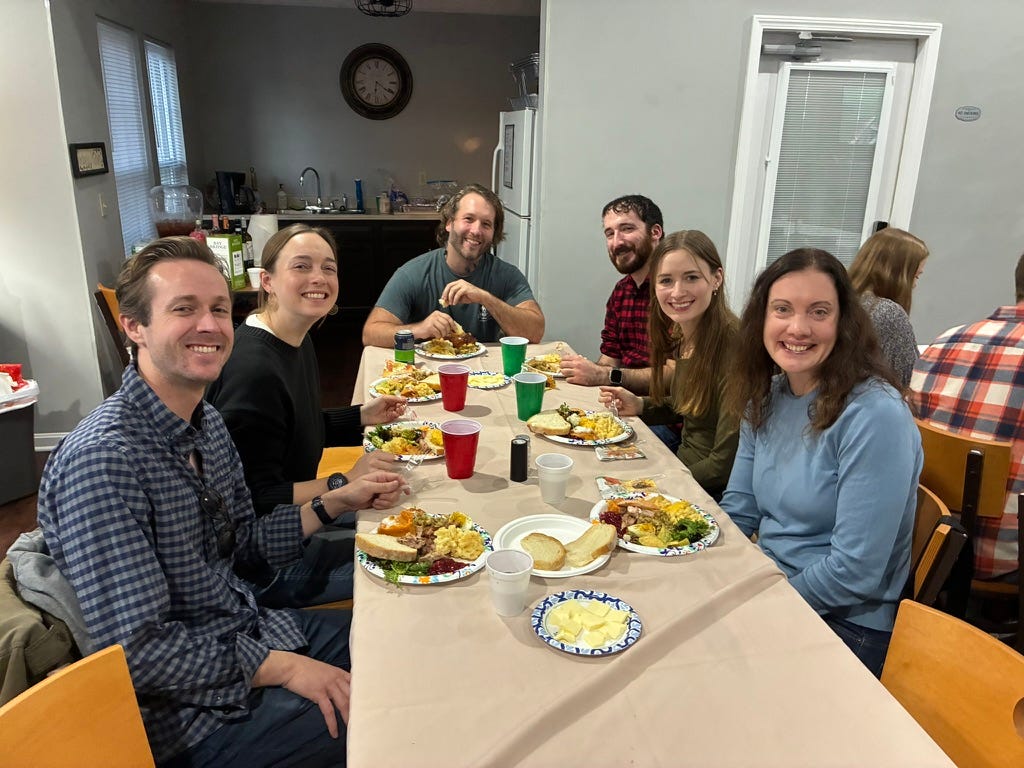
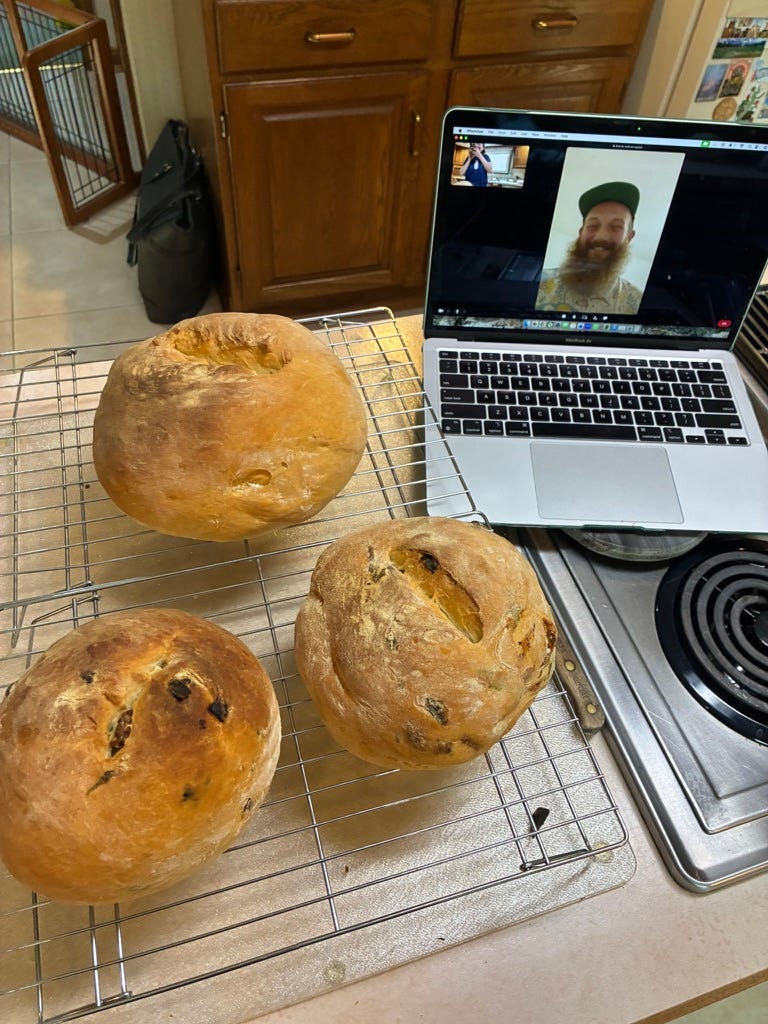
It takes energy to haul myself out of this mindset. It’s the Dark Times, the Cold Days setting in, the specter of Seasonal Depression Season, and the thought of doing anything but burrowing longer, lingering with my book and my candle in the morning, is bone-deep dreadful. I need to hold strong in the tension. I need to not be precious. This is me hauling, and hunkering, and sucking it up. I just reread This is How You Lose the Time War for the fifth time. (It’s better every time.) I’m going to every run club and gathering of friends that I can. And I’m learning to bake bread.
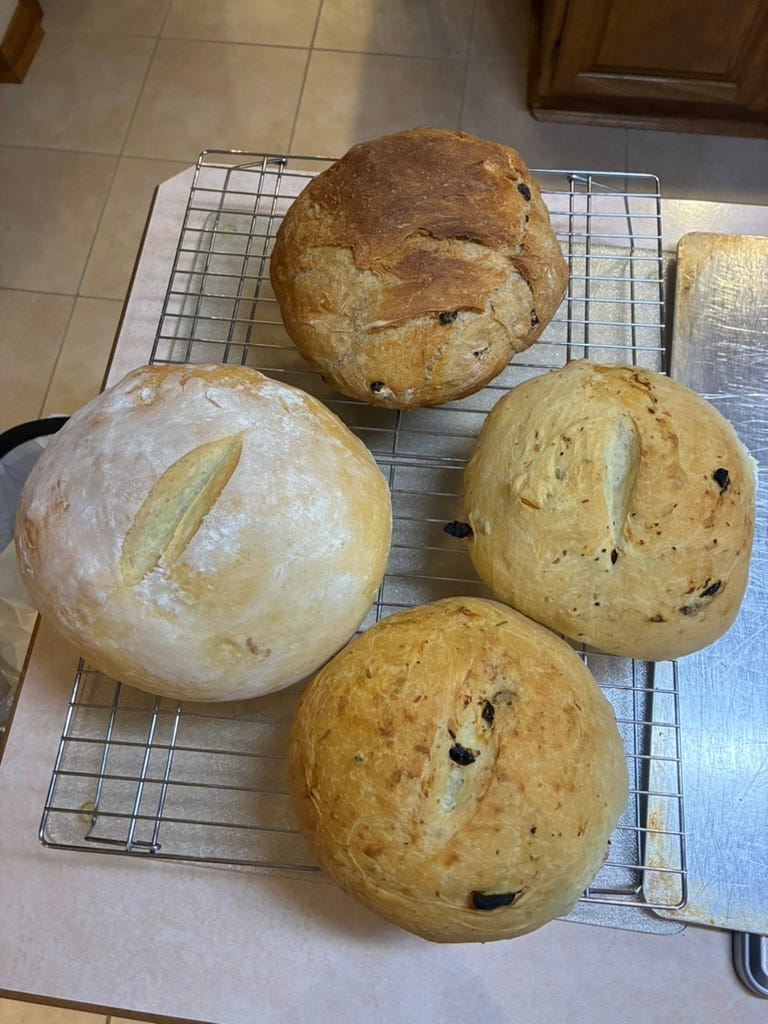
It’s easier than I thought it would be. There aren’t really that many ingredients in white bread: flour, salt, yeast, oil, water. It isn’t what you would call complex, even if it does take a while. But you have to add in the right ratios at the right time, and you’ve got let it rise until it’s the right size, knead and fold and coax the correct shape, and have the patience to wait in the in-between. Once you mix it all together and follow the directions, there’s little else to do but to wait and see what happens. Maybe your first loaf has a giant air bubble in it, and one end of it is unusable except as a soup scoop. But maybe your third round is complex carbohydrate perfection, soft and light and flavorful within perfect crackly crust. You can shape, you can flatten, you can poke out the air after that last proof, but much is up to the will of the oven.
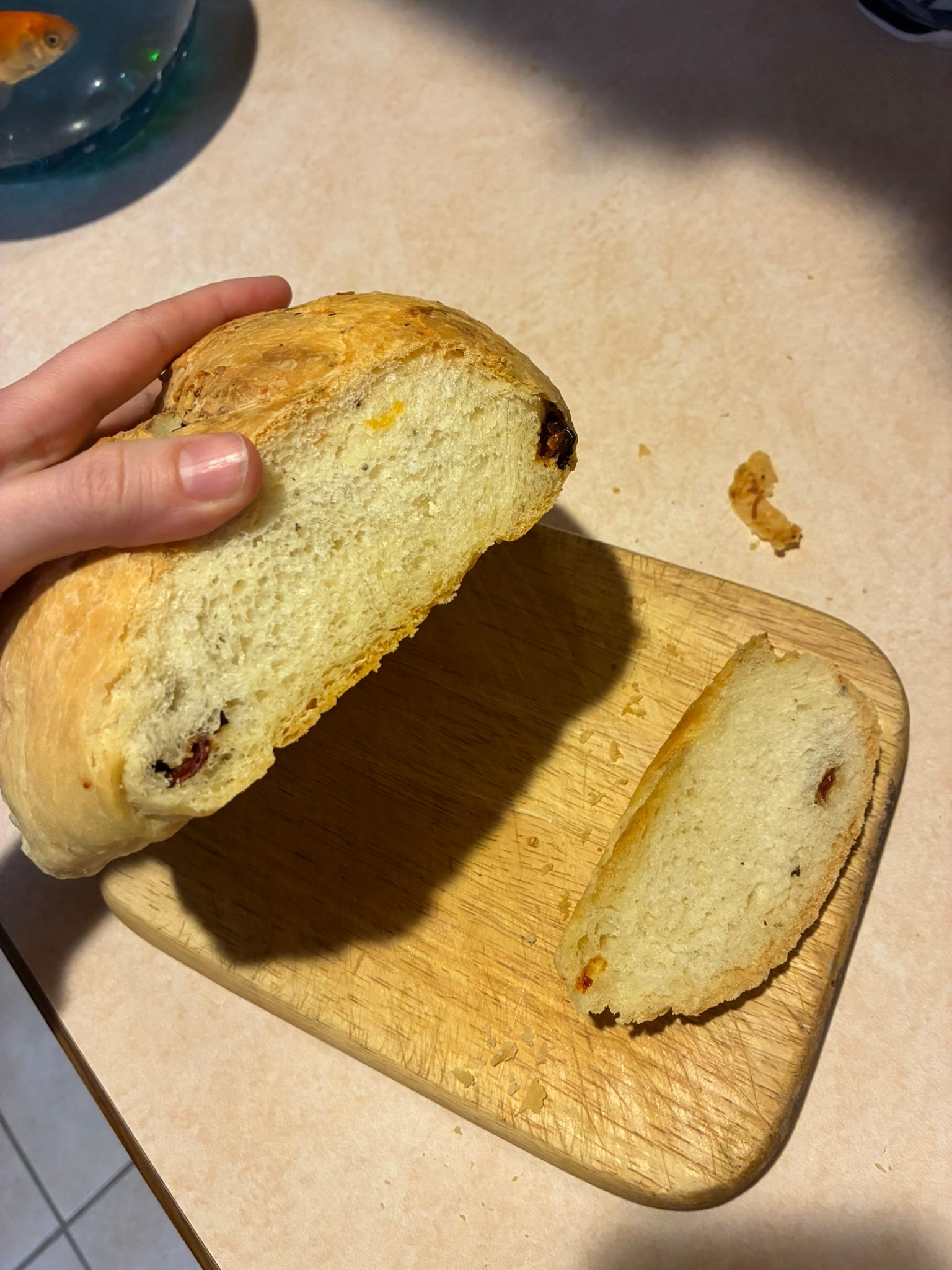
This is a metaphor about life. Half-baked (sorry) because it’s late. What I mean to say is: you can have sort of an idea of how something is, or will be, but it will never be straightforward or turn out exactly as you imagined. The desert isn’t one thing, and neither is any moment or truth. And isn’t that amazing. I’m thankful that I can’t see past my headlights, or around the corner to the next turn, or inside my bread to know if it is done or not. So much is impacted by so many factors. It’s like this, but like that, too. Me and you. There are good days ahead, but there is also the now. Just hold it in your hands with me. You’ll see.
🍞